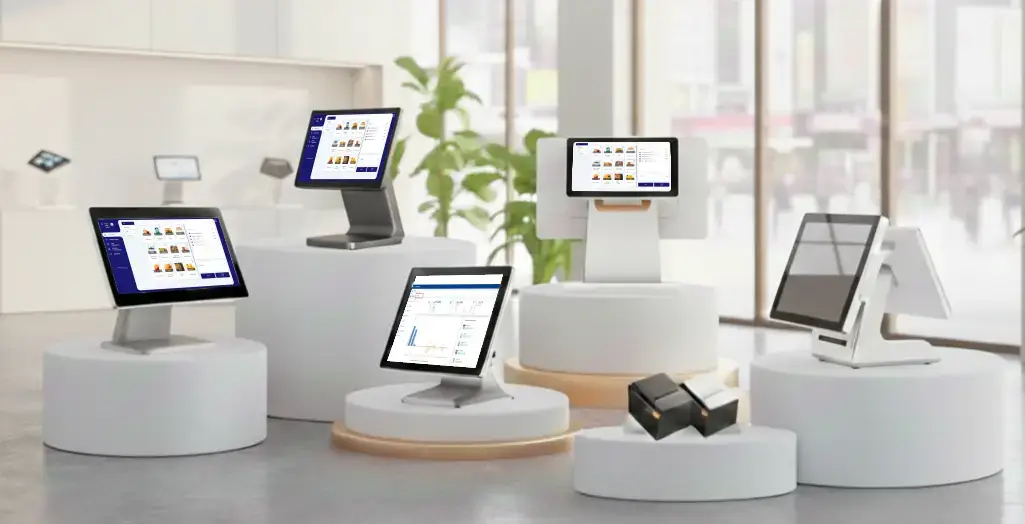
In 2026, the primary difference between POS software and hardware is their role in the business ecosystem: POS hardware is the physical touchpoint (terminals, scanners, kiosks), while POS software is the digital "brain" that manages inventory, data, and payments. For hardware sellers, bundling software like SalesPlay POS transforms a one-time commodity sale into a high-margin, recurring revenue stream that secures long-term client loyalty.
If you are a hardware vendor selling only terminals and printers, you are competing on price in a race to the bottom. In the current retail landscape, customers don't just want a "box" they want a solution that works out of the box.
In our testing at SalesPlay, we’ve seen that hardware sellers who bundle our cloud-based software increase their "stickiness" by 40%. When you provide the software, you aren't just a vendor; you become the infrastructure of their business. As the market reaches saturation, the "box-mover" model is being replaced by the "Solution Architect" model. If you aren't providing the brain, your hardware is just an expensive paperweight the moment a competitor offers a more integrated ecosystem.
To effectively sell the bundle, you must first educate your clients on the distinct but inseparable roles of these two entities. In 2026, the hardware and software must exist in a state of symbiotic "Technical Precision."
Hardware is the tactile experience of the brand. It is the interface through which every dollar passes.
Countertop Terminals: The primary interface for high-volume retail environments, now featuring dual-facing screens for customer engagement.
Mobile & Handheld POS: Essential for "line-busting" and tableside ordering in restaurants. According to recent 2025 industry reports, mobile checkout reduces wait times by 30%.
NFC & Contactless Readers: In 2026, support for NFC Payments (Apple Pay, Google Wallet, and wearables) is a mandatory baseline, not a luxury.
Peripherals: Barcode scanners, receipt printers, and cash drawers that must be "plug-and-play" with the software.
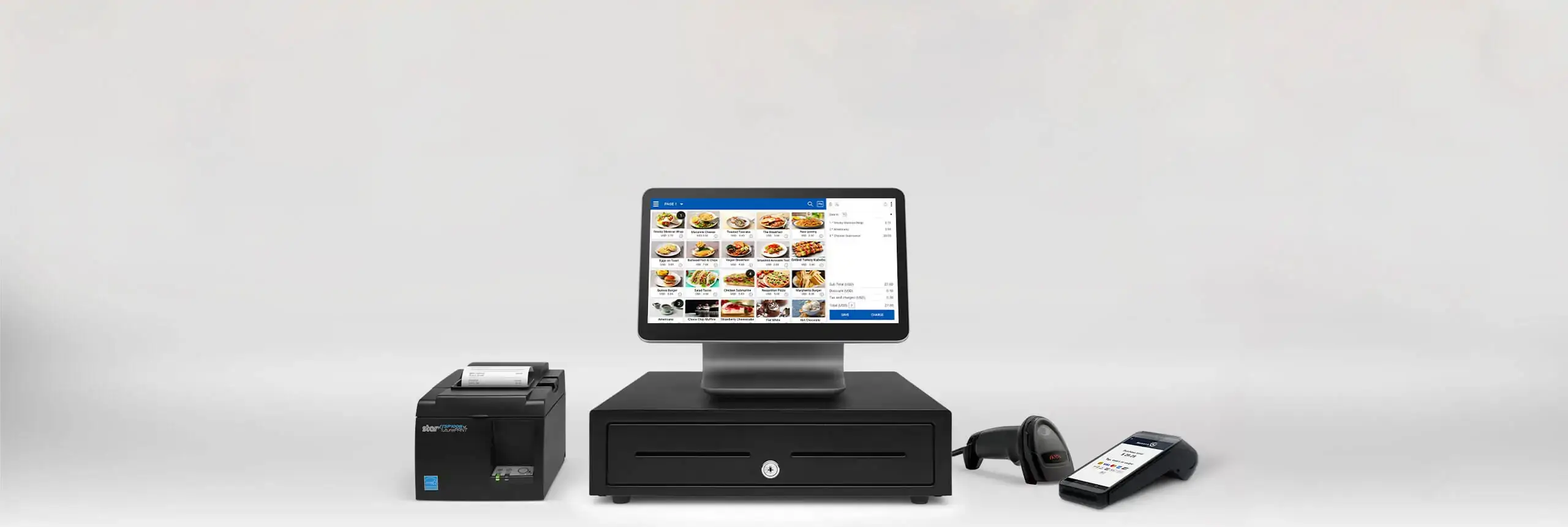
Software is where the business lives, breathes, and grows. It turns raw data into actionable intelligence.
Cloud-Based Inventory: Real-time tracking across multiple locations ensures a business never loses a sale due to a "stockout."
API Integration: The ability to connect with accounting tools like QuickBooks or e-commerce platforms like Shopify and Amazon.
AI-Driven Insights: Modern software now acts as a "proactive assistant," analyzing sales trends to suggest better pricing strategies and automated reordering.
When setting up inventory for our retail clients, we found that the biggest pain point wasn't the hardware breaking—it was the hardware not "talking" to the software.
Hardware is a one-time transaction. Once it's sold, you have to find a new customer to keep your business alive. By reselling SalesPlay POS software, you tap into monthly subscription fees. This creates a predictable income stream that covers your overhead even during slow hardware cycles. In the volatile economy of 2026, MRR (Monthly Recurring Revenue) is the only metric that matters for business valuation.
[caption id="attachment_7619" align="alignnone" width="1080"] Profitable Partnerships: How to Succeed as a Reseller with White Label Cloud POS[/caption]
When you sell a "mismatched" system (Brand A hardware with Brand B software), the client blames you when they don't sync. Bundling a certified solution like SalesPlay ensures that the barcode scanner and the inventory database work in perfect harmony from day one. This significantly reduces the volume of "unpaid" support calls that eat into your hardware margins.
In 2026, retail is no longer divided into “online” and “offline.” Customers move fluidly between websites, social platforms, marketplaces, and physical stores — and they expect a seamless experience at every touchpoint. A standalone POS terminal cannot manage that complexity on its own.
When you combine certified POS hardware with modern cloud-based software like SalesPlay, you deliver more than a payment device. You provide a connected retail ecosystem — one that unifies sales channels, synchronizes inventory, protects transaction data, and supports long-term growth.
This bundled approach turns a basic checkout setup into a scalable, data-driven infrastructure. And for your clients, that means stronger operational control, better customer experiences, and measurable business performance in an increasingly competitive 2026 market.
Buy Online, Pick Up In Store (BOPIS) is no longer a premium feature — it’s a baseline customer expectation. A hardware-only setup simply cannot manage cross-channel inventory synchronization or online order routing.
Cloud POS software connects:
With near real-time stock synchronization, businesses can confidently sell online and in-store without overselling or stock mismatches. This prevents lost revenue, improves customer satisfaction, and reduces refund friction.
For your client, this means:
For you as a reseller, it positions your solution as omnichannel-ready from day one.
Internet outages still happen — and when they do, revenue shouldn’t stop.
A modern hybrid cloud POS system processes transactions locally and automatically syncs data once connectivity is restored. This ensures:
Instead of selling a device that depends entirely on Wi-Fi, you provide an operational safety net. In high-volume retail and hospitality environments, that resilience can protect thousands in daily revenue.
With PCI-DSS 4.0 fully enforced in 2026, payment security is no longer optional — it’s a legal and operational necessity.
Modern POS software is designed to support PCI-DSS–aligned processing through certified payment gateways and encrypted transaction handling. This includes:
By bundling secure software with compatible hardware, you remove the risk of mismatched systems that could expose merchants to data breaches or regulatory penalties.
Security is no longer just IT it’s brand protection.
In 2026, contactless payments are standard. Customers expect to pay with:
Certified NFC-compatible hardware combined with modern POS software ensures seamless processing, customer trust, and faster checkout experiences.
Speed at checkout directly impacts queue length, staff efficiency, and daily revenue per square foot.
Today’s businesses rarely operate in isolation. They rely on integrations with accounting, e-commerce, marketing, and analytics platforms.
A cloud POS solution enables API-based connections with tools like:
This ensures automated bookkeeping, unified reporting, and scalable growth without manual reconciliation.
For growing retailers, integration capability is often the difference between stagnation and expansion.
Inventory errors are one of the most expensive silent killers in retail.
With centralized cloud-based inventory management, businesses gain:
Instead of reacting to shortages, merchants operate proactively — improving cash flow, reducing dead stock, and protecting margins.
When you bundle software with hardware, you are no longer competing on terminal price.
You are selling:
That shift transforms you from a device supplier into a long-term strategic partner.
In 2026, businesses don’t want “a POS machine.”
They want an ecosystem that grows with them.
And that ecosystem starts with the right software powering the right hardware.
Shift your language from technical specs to business outcomes.
| Instead of saying... | Say this... |
| "This terminal has a 10-inch screen." | "This terminal runs SalesPlay's Real-Time Reporting, giving you a bird’s-eye view of your margins from your phone." |
| "This printer is very fast." | "This system automates your kitchen routing, sending orders directly to the KDS to reduce food waste and errors." |
| "We offer a discount on bulk hardware." | "We provide a complete 'Business-in-a-Box' that cuts your setup time from weeks to minutes." |
In 2026, Google doesn't just look for keywords like "POS System." It looks for Entity-Led Content. To dominate search results, we must focus on the relationships between these entities:
Cloud-based Inventory linked to Global Supply Chains.
NFC Payments linked to Customer Loyalty Profiles.
API Integration linked to Business Scalability.
By bundling SalesPlay, you aren't just selling a tool; you are selling Topical Authority. You are providing the client with the data depth they need to rank their own business higher in local search results through accurate, real-time "In-Stock" markers on Google Maps.
Q: Is it difficult to migrate from a legacy hardware-only setup to a SalesPlay bundle? A: No. In our testing, we’ve found that our migration tools can import legacy CSV data into the SalesPlay cloud in under 15 minutes, allowing for a seamless transition without downtime.
Q: Does SalesPlay support the latest 2026 security protocols? A: Absolutely. SalesPlay is fully compliant with PCI-DSS 4.0 standards and utilizes end-to-end encryption for all NFC and chip-based transactions.
Q: Can I customize the software for specific industries like Salons or Cafes? A: Yes. SalesPlay features modular API integrations that allow you to toggle industry-specific features like appointment scheduling or table management.