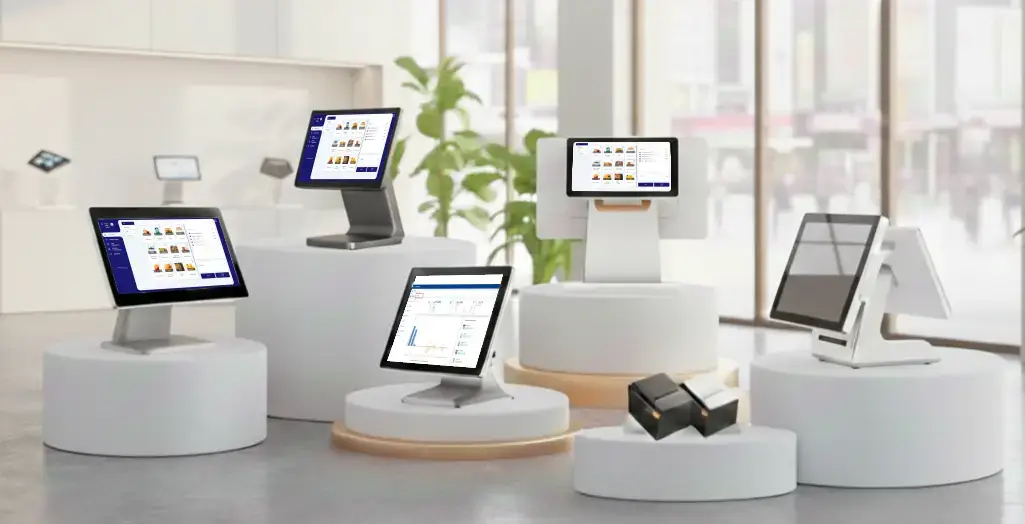
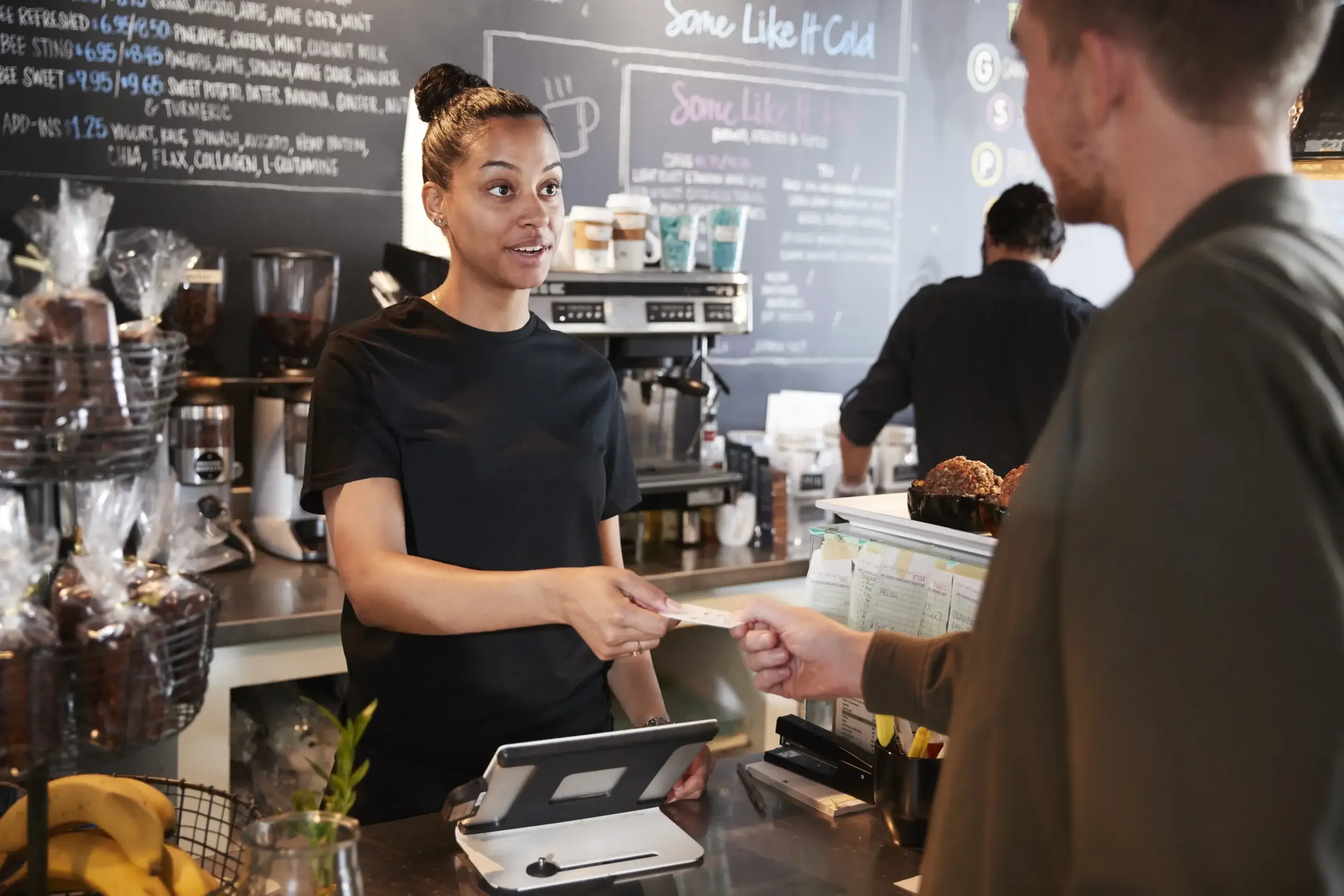
Small businesses are transforming faster than ever. Customer expectations are changing, payment methods are evolving, and competition is increasing. In 2025, your POS system isn’t just a billing tool it’s the operating system that powers your entire business.

From payments and inventory to customer behavior and analytics, modern POS systems are shaping how small businesses grow, compete, and innovate.
In this in-depth guide, we explore the latest POS system trends, backed by current research, expert insights, and case-study-driven examples plus how your business can leverage these innovations in 2025.
The global POS software market is booming and that growth is driven largely by small businesses adopting smarter, cloud-based tools.
The POS software market is valued at ~USD 16-16.4B in 2025, expected to reach ~USD 29–41B by 2030–2034 (≈9-12% CAGR).(precedenceresearch)
Cloud POS is growing at 20%+ CAGR, driven by small businesses adopting tablet POS, mobile POS, and SaaS-based tools.(gminsights)
Emerging markets (Asia-Pacific, Africa, South Asia) are shifting from legacy POS to mobile-first, cloud-first solutions.
Small businesses don’t want expensive hardware or complex systems. They want:
Low-cost setup
Mobile capability
Real-time insights
Multi-channel selling
Faster payments

In the new economy, your POS is no longer just a machine - it’s the command center of your entire business.
Legacy POS terminals are fading. Cloud-based, mobile, and softPOS (Tap to Phone) systems are taking over.
Cloud POS adoption is accelerating across small retail, quick-service restaurants, cafés, wellness centers, and field-service businesses.
Tap-to-phone usage (softPOS) has grown 200%+ year-over-year, supported by major payment networks.
Digital wallets became the largest POS payment method in many APAC regions in 2024–2025.
Start selling instantly with just a smartphone.
Use tablets instead of bulky hardware.
Manage your business from anywhere.
Avoid high upfront device costs.
Enable pop-up shops, home deliveries, fairs, and events.
Ridgeway Coffee Cart switched from cash-only to a mobile cloud POS + tap-to-phone system.
Impact:
40% faster checkout
Accepts all contactless payments
Accurate real-time sales even at events
Inventory synced with their main café
Cloud and mobile POS aren’t the future - they’re the present, and businesses that delay risk falling behind.
A strong example is SalesPlay POS, which lets small businesses switch seamlessly between Android phones, tablets, and dedicated POS hardware. Whether you're a food truck, boutique, or service provider, SalesPlay's mobile-first design makes operations faster and more flexible without increasing cost.
Today’s customers don’t shop in just one place they shop everywhere.
✔ In-store
✔ On Instagram
✔ On WhatsApp
✔ On their website
✔ Through delivery apps
✔ Using QR menus at the table

Because of this, small businesses need one unified POS system that connects every sales channel seamlessly.
Modern small businesses expect their POS to do more than record transactions. They need:
Unified inventory across online and offline channels
A single customer profile with loyalty syncing automatically
A centralized dashboard showing all sales in real time
Integrated eCommerce + in-store POS
Social commerce support (Instagram, TikTok Shop, WhatsApp orders)
This unified view eliminates the headaches of duplicate stock entries, manual adjustments, and mismatched customer data.
Bloom & Co Boutique used to update stock separately for store visitors and online buyers, which often led to errors. After switching to an omnichannel POS:
Stock mismatches dropped by 70%
Revenue increased by 20% due to better product availability
They launched Instagram Shop effortlessly with synchronized inventory
Customers now expect a frictionless experience, whether they buy in the shop or scroll on their phone and your POS must support that.
For small businesses entering omnichannel for the first time, choosing a POS with centralized stock management and automated sync is essential.
SalesPlay POS makes this easy with:
eCommerce integrations
QR ordering
Delivery platform connections
Loyalty syncing
Real-time unified inventory
Everything flows into one dashboard, so businesses no longer need to reconcile stock manually or juggle separate customer lists.
AI isn’t just for big retail chains anymore. In 2025, AI is built directly into modern POS platforms - giving small businesses superpowers they never had before.
AI predicts when stock will run out and recommends reorder quantities based on:
Seasonality
Peak hours
Sales velocity
Customer demand cycles
AI can predict your busiest days, helping owners plan staffing, promotions, and stock.
AI identifies:
High-value customers
At-risk customers
Frequency patterns
Best products for upsell or bundles
AI detects unusual discounts, voids, or refund patterns.
Downtown Grill introduced AI-driven stock forecasting:
Food waste dropped 15%
Predictive scheduling reduced rush-hour staff shortages
AI-suggested combos increased average order value by 8%
In 2025, AI-equipped POS systems will separate thriving businesses from surviving ones.
Checkout experiences are changing. Customers expect fast, touch-free, wallet-friendly payments.
Contactless cards now make up 20-30% of POS transactions in many regions.
Apple Pay, Google Pay & local e-wallets dominate APAC.
Cash usage continues to decline significantly worldwide.
BNPL is used by over 25% of adults in developed markets.
QR-based payments are rising globally, especially among small vendors.
Shorter checkout time → more customers served
Higher transaction success rate
Better hygiene & customer confidence
Supports younger, mobile-first customers
Enables online, in-store, and remote sales
If your POS doesn’t support the full mix-tap, chip, QR, wallet, BNPL-it’s already outdated.
POS systems are becoming analytics platforms.
Small businesses can now see:
Best-selling items
Employee performance
Low-margin products
Dead stock
Hourly/daily sales trends
Customer repeat behavior
Owners no longer need spreadsheets. Instead, they get:
Visual charts
Real-time insights
Automatic alerts
Custom reports
A small restaurant used data to discover:
Thursday nights had the highest margin dishes
Lunch hours were busy but under-staffed
Two menu items created 40% of profits
These insights improved staffing, reduced costs, and boosted profit instantly.
Data is becoming a competitive advantage and POS is the source.
With digital payments rising, so does risk. Modern POS platforms now emphasize:
PCI-DSS compliance
End-to-end encryption (E2EE)
EMV chip support
Tokenization
Role-based permissions
Detailed audit logs
Automatic security updates
Small businesses are increasingly aware that one breach can damage their reputation. A secure POS builds trust and ensures smooth operations.
When businesses compare POS systems, they should ask these questions:
Can I access my POS from anywhere?
Does it work on phones/tablets?
Does it sync online + offline sales automatically?
Does it support tap-to-pay, wallets, QR, and BNPL?
Does it offer smart reports and actionable insights?
Can it handle real-time stock? Multi-location? Variants?
Is it PCI-compliant and encrypted?
Will it grow with my business?
The biggest trend is the shift toward cloud-based and mobile POS systems, including Tap-to-Phone (softPOS). These systems are affordable, quick to set up, and allow business owners to manage operations from anywhere.
Customers now shop across multiple channels — in-store, online, social media, delivery apps, and WhatsApp orders. An omnichannel POS keeps inventory, orders, and customer data synced across all channels, ensuring accuracy and consistency.
Yes. Mobile POS and softPOS are now widely used by cafés, retail shops, food trucks, delivery businesses, and pop-up stores. They support contactless payments directly on smartphones and tablets, making them flexible and cost-effective.
A future-ready POS should support:
Contactless card payments
Apple Pay & Google Pay
Local e-wallets
QR code payments
Online payment links
BNPL (where supported)
Multiple payment options improve checkout experience and customer satisfaction.
A modern POS automates pricing, taxes, discounts, and stock updates. This removes manual entry mistakes, ensures accurate billing, and keeps inventory levels updated in real time after every sale.
It’s a system that syncs stock automatically across all platforms — physical store, website, Instagram Shop, WhatsApp, and delivery apps. When an item sells anywhere, the POS updates inventory everywhere to prevent overselling.
Yes. Many modern POS systems integrate with Instagram Shop, TikTok Shop, and other social platforms. This allows businesses to sync product availability, manage orders, and track stock across social commerce channels.
A secure POS should offer:
PCI-DSS compliance
EMV chip support
Data encryption
Tokenization
Role-based user access
Audit logs
These features protect customer data and reduce fraud risks.
Absolutely. A good POS improves checkout speed, reduces errors, syncs online and in-store sales, manages stock automatically, and provides clear insights on products and customers. This leads to better decisions and higher revenue.
SalesPlay POS offers cloud access, mobile POS, tap-to-pay support, omnichannel inventory sync, QR ordering, multi-payment options, loyalty integration, and secure transaction processing. It’s designed for SMEs looking for an affordable, future-ready POS solution.
Thousands of modern small businesses trust SalesPlay POS to streamline operations, reduce errors, and boost sales. Whether you're running a retail store, café, restaurant, salon, or service-based business, SalesPlay gives you the tools to operate smarter every day.
👉 Become a POS Reseller with White-Label Program
Grow your own branded POS business with zero coding and recurring revenue opportunities.
👉 Start with the Free POS Plan
SalesPlay offers a full-featured free POS system (no credit card required). Perfect for new businesses or those testing a modern POS for the first time.
Your POS shouldn’t just process payments.
It should power your business growth.