Running a restaurant often feels like juggling multiple tasks at once. One small mistake can affect the guest experience, team morale, or profit margins. Today, restaurant owners face serious challenges such as labour shortages, rising food costs, and increasing pressure on margins, making smooth operations harder than ever.
In this article, we’ll walk through 12 of the most common problems restaurants face today, share real-world data, and show you practical fixes you can apply this week. Whether you’re a café manager, full-service restaurant owner or multi-unit operator, you’ll walk away with actionable insights.
Let’s say you’re running a neighbourhood full-service restaurant with casual fine dining, 80 seats, and a mix of dine-in and take-out. You have experienced chefs and a loyal local clientele. But lately, you may have noticed higher staff turnover, inconsistent food quality, slimmer profits, and more guest complaints.
These issues are not unique. They reflect broader shifts in the restaurant industry:
With that backdrop, let’s dig into the trouble spots and how you can turn them into opportunities.
Restaurants constantly struggle to attract and retain reliable employees. The industry’s demanding hours, intense pace, and relatively low wages make it difficult to hire skilled staff-and even harder to keep them. High turnover means teams are frequently short-staffed or filled with new hires who require training. The operational impact is immediate: slower service, inconsistent food preparation, rising training costs, and managers stretched thin onboarding people instead of improving guest experience. When turnover becomes a cycle, service quality becomes unpredictable, morale drops, and experienced staff burn out faster.

Each new hire requires time to train, lowers productivity, and inconsistent staff impact service quality and guest experience.
Build a core culture and clear onboarding process: define your service standards, role expectations, and training road-map.
Use flexible scheduling and cross-training to adapt to peak times.
Offer staff incentives tied to guest satisfaction and retention (for example “x % of guests rate service 9/10 → bonus”).
Leverage technology (e.g., scheduling apps, POS + employee modules) to reduce administrative burden so managers spend more time coaching.
Food inflation, supply-chain instability, and fluctuating commodity prices create an unpredictable cost structure. Restaurants often find that ingredients cost significantly more from one month to the next, yet competitive pressure prevents them from raising menu prices at the same pace. This imbalance forces operators to absorb shrinking margins. Meanwhile, suppliers may change pricing, require minimum orders, or experience shortages creating further operational pressure. Without strict cost control, even busy restaurants can become unprofitable.
When food cost goes up but menu prices stay the same (for competitive reasons), profit margins shrink-or you risk alienating guests if you raise prices too much.
Institute monthly food-cost reviews by category; negotiate with multiple suppliers.
Simplify menu: reduce items with high cost volatility or low margin.
Use menu-engineering: highlight high-margin dishes, remove underperformers.
Adopt portion control, waste tracking and inventory turnover metrics.
Run a “menu audit” this week: identify the 10% lowest-selling / lowest-margin dishes and evaluate whether to remove or re-price them.
Poor inventory control is one of the biggest silent profit killers in restaurants. Inaccurate stock counts, over-ordering, forgotten items at the back of the fridge, improper storage, or staff not following first-in-first-out practices lead to avoidable spoilage. Under-ordering creates the opposite problem menu items suddenly become unavailable, frustrating guests and interrupting service flow. Many operators also lack visibility into actual usage versus theoretical usage, meaning they cannot detect waste patterns, theft, portion inconsistencies, or unreliable suppliers.
Wastage eats margin; unavailable ingredients upset guests; inconsistent quality undermines reputation.
Implement a regular cycle count (e.g., daily quick check of high-value items).
Use POS/inventory-system integration to track usage trends and adjust orders accordingly.
Introduce a “first in, first out” shelf/stock policy to minimise spoilage.
Record and analyse food-waste incidents monthly to identify patterns.
Print a one-page “waste dashboard” each week: list items wasted, costs, and responsible team leads; review in your team huddle.
Slow service long wait times to be seated, delayed order-taking, bottlenecks in the kitchen, or slow payment processing is one of the most common guest complaints. The issue typically stems from multiple sources: an inefficient floor layout, unclear staff responsibilities, outdated workflows, communication breakdowns between FOH and BOH, or lack of proper technology to synchronize orders. During peak hours these weaknesses multiply, leading to overwhelmed staff, rising guest frustration, walk-outs, and damaging reviews.
In a world of instant gratification, guests expect quick, smooth service. Delays equal frustration, bad reviews and lost repeat business.
Redesign operational flow by mapping every step of the guest journey from seating to payment to identify bottlenecks. Introduce technology that supports faster order routing and reduces back-and-forth movement. Mobile POS tools such as SalesPlay POS allow servers to take orders tableside and send them directly to the kitchen, minimizing errors and accelerating order processing. Integrating a kitchen display system (KDS) further reduces communication delays and improves ticket accuracy. Train staff on peak-hour triage to prioritize tasks that protect guest experience
Pilot one shift using mobile POS ordering through SalesPlay POS to measure improvements in ticket time and table-turn rate. Compare with your current baseline to quantify efficiency gains.

Restaurants often accumulate an oversized menu over time, adding new items without removing old ones. The result is a bloated, confusing menu that increases prep time, expands inventory requirements, and puts pressure on kitchen staff to master too many recipes. This complexity increases errors, slows down service, and creates inconsistent dish quality. Beyond operations, a menu that lacks a clear identity makes it difficult for guests to understand the restaurant’s core concept leading to lower conversions, weaker brand recall, and higher food costs.
Complex menus cost more to stock, increase prep time, raise likelihood of errors, and dilute brand identity.
Simplify the menu by focusing on a smaller set of signature dishes that reinforce the restaurant’s core concept. Use data instead of intuition pull item-level sales reports from SalesPlay POS to identify top sellers, low performers, and high-margin dishes. Streamline prep lists and cut items with low demand or high cost volatility. Ensure menu descriptions clearly communicate your identity so guests know what to expect.
In your next team meeting, ask: “Which two menu items cost us most but sell least?” Commit to removing or reworking them this quarter.
Many restaurants depend solely on word-of-mouth or walk-in traffic without a structured strategy for guest retention or digital visibility. This creates unpredictability in daily sales and leaves restaurants vulnerable to competitors with stronger online presence. Lack of consistent marketing results in fewer repeat visits, missed upsell opportunities, and weak engagement. With diners heavily influenced by online reviews, social media activity, and digital recommendations, restaurants that do not invest in loyalty programs and marketing lose relevance quickly.
With social media and online reviews influencing 74 % of diners’ choices. Restroworks Without proactive marketing and retention, you’ll miss repeat business and new-guest acquisition.
Launch a guest-loyalty program offering incentives, birthday rewards, referral bonuses.
Keep social-media active: post behind-the-scenes, chef stories, guest highlights.
Monitor and respond to online reviews (positive and negative) within 48 hours.
Use email/SMS marketing (e.g., “Chef’s Monday special”, “Invite your friends night”).
Enable the built-in loyalty program in SalesPlay POS and begin capturing customer details at checkout. Start with a goal to sign up one in every ten guests this week.
Restaurants frequently operate with separate systems POS, kitchen printers, online ordering apps, reservation tools, inventory spreadsheets that do not communicate with each other. This fragmentation forces staff to perform manual data entry, increasing errors and reducing efficiency. Operators lack a unified view of sales, costs, inventory, and labour. Without integration, decision-making becomes reactive and guess-based, and operational problems remain hidden until they escalate.
Lack of integration slows operations and prevents data-driven decisions.
<.>
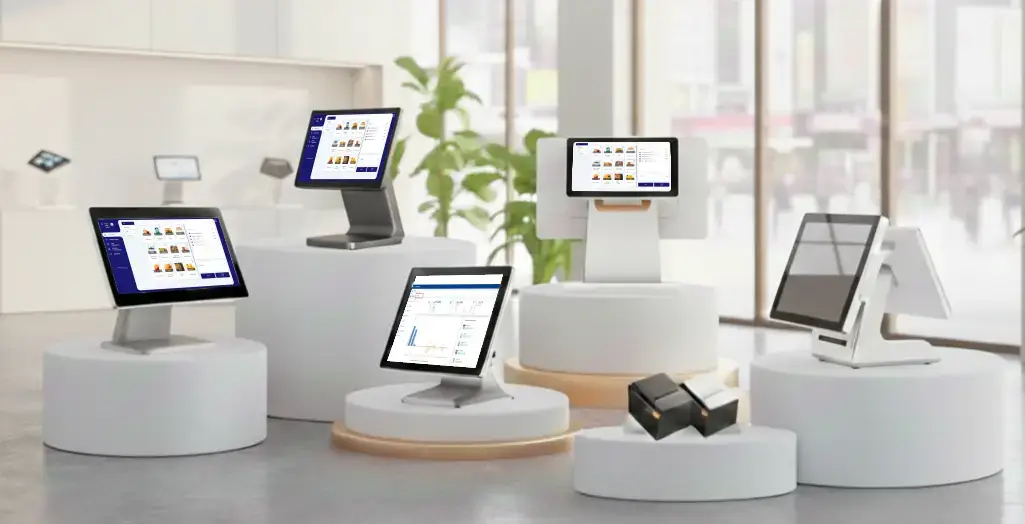
Audit your current tech stack and eliminate systems that rely on manual syncing or duplicate entries. Move toward an integrated platform SalesPlay POS combines POS, inventory, CRM, online ordering, and analytics to ensure all data flows in real time. Train managers on reviewing dashboards daily so decisions are based on accurate, unified insights rather than guesswork.
Pick one manual task (e.g., daily inventory update) and automate it or reduce it by 50 % this month.
Restaurants often struggle to deliver the same level of service, ambiance, and food quality every day. Variability in staff performance, shifting kitchen teams, unclear service standards, or inadequate supervision leads to inconsistent guest experiences. Even small lapses a cold dish, slow greeting, messy table, or inconsistent portion size accumulate into negative impressions. Guests expect reliability when experiences vary, their trust erodes and reviews suffer.
Guests expect repeatability. A once-great visit sets expectations; if the next is sub-par, word spreads and loyalty erodes.
Define an “experience roadmap”: how each touchpoint (greeting, ordering, food delivery, payment) should feel.
Use mystery-diner audits or guest surveys quarterly.
Create a service recovery protocol: when something goes wrong, the team knows exactly what to do.
Share one “morning-shift story” in your team huddle: a guest visit that exceeded expectations-what happened, why it mattered.
A restaurant may offer excellent food, but if its physical location is difficult to access, lacks parking, has poor visibility, or is mismatched with the neighborhood demographics, foot traffic remains low. Many operators also underestimate how signage, street presence, or curb appeal affect guest decisions. Additionally, urban shifts, new competitors, or changes in nearby businesses can drastically reduce walk-in volume. When location constraints go unmanaged, restaurants depend heavily on delivery or promotions to fill the gap.
Even with great food and service, if guests struggle to reach you, or don’t feel drawn in, you’ll lose business.
Audit your location: signage, lighting, parking, public-transport links, pedestrian flow.
Consider partnerships: local events, nearby businesses, pop-ups that drive foot traffic.
If relocation isn’t feasible, enhance your delivery/take-out presence to expand catchment.
Take a guest’s view-walk from nearby parking/public transit to your door, note friction points and fix at least one (e.g., signage, lighting, menu board by curb).

Many restaurant owners lack a clear understanding of their real operating costs. Without structured financial processes weekly P&Ls, food-cost tracking, labour-cost benchmarks they end up making decisions based on instinct rather than data. Small inefficiencies add up: overstaffed shifts, underpriced dishes, excessive waste, or unnoticed supplier price increases. Because restaurant margins are thin, even a 3-5% deviation can turn a profitable operation into a loss-making one.
Margins in restaurants are thin-if you don’t control costs and measure performance, you risk running blind.
Define and monitor 3-5 KPIs monthly: food cost %, labour cost %, table-turn rate, guest average spend.
Build weekly profit-&-loss snapshots and review with your management team.
Use scenario-planning: “If food cost rises 5 % next quarter, what do we do?”
Generate a simple one-page dashboard this week: food cost %, labour cost %, and compare against industry benchmarks or your internal target.
The rapid growth of off-premises dining has caught many restaurants off guard. Some rely entirely on third party platforms with high commissions others treat take-out as an afterthought with poor packaging, slow preparation, or menu items that don’t travel well. This results in inconsistent food quality on delivery, negative reviews, and low profitability. Without a structured off premises strategy, restaurants lose a major revenue driver in today’s market. Why it matters
Guest behaviour has shifted toward take-out/meal kits/hybrid models; neglecting or mis-managing this channel limits revenue and brand control.
Build your own ordering channel (website/app) to reduce third-party commissions.
Design off-premises-friendly packaging, menu items and logistics.
Integrate delivery/take-out metrics into your main P&L (e.g., average check, cost of packaging, labour for off-premises).
Offer a “take-out special” this week: packaged at cost, advertised via email/social, track incremental revenue and margin separately.

Many restaurants operate without understanding their data-guest visit frequency, top-selling dishes, customer lifetime value, promotion performance, or sales by hour. Without segmentation or analytics, marketing becomes guesswork and budgets are wasted on ineffective channels. Operators also miss early warning signs: dropping average checks, declining repeat visits, or rising wastage. Without data-driven insights, restaurants fall behind competitors that optimize continuously.
Without data, you can’t optimise: which dishes sell best, which guests return, which promotions work. You run reactive not proactive.
Set up tracking in your POS/CRM: guest visits, spend per visit, segment by type (local regulars vs. first-timer).
Run A/B tests on promotions: e.g., “weekday lunch special A” vs. “weekday lunch special B” and measure results.
Use dashboards to surface insights monthly: top dishes, low-selling items, guest feedback trends.
Pick one marketing channel (e.g., Instagram) this week, post two different messages and track engagement and resulting bookings/visits.
The restaurant sector will continue to evolve deeply: consumer preferences shift, technology accelerates, cost pressures persist. The survival “spotlight” is on operators who treat these 12 areas not as one-off fixes-but as ongoing systems to refine.
By building a culture of measurement, continuous improvement and guest-centric operations, your restaurant can not only survive-but thrive.
Staffing, cost-control, guest experience and technology integration are not optional-they’re foundational.
Focus your efforts: pick one or two of the 12 problem-areas this quarter, implement a fix, measure impact.
Use data-regularly. Without measurement you’re making guesses.
Guest experience and consistency build loyalty; loyalty drives margins.
Off-premises and digital channels aren’t a “nice add”-they’re essential.
Q1: What is the biggest problem most restaurants face?
Labor/staffing and rising food costs are cited as top challenges by many operators.
Q2: How can I immediately improve service speed in my restaurant?
Map the guest journey, identify bottlenecks (e.g., seating wait, kitchen delay), introduce tech (kitchen display, mobile POS) and train staff on proactive flow.
Q3: Is menu simplification really worth it?
Yes. A focused menu reduces inventory complexity, waste, training needs and allows your kitchen to do fewer things but do them very well-improving consistency and margin.
Q4: How do I measure if my changes are working?
Use KPIs: food cost %, labour cost %, guest average check, table-turn rate, repeat visit rate. Track monthly, compare against your baseline and review results with your team.
Q5: My restaurant already uses third-party delivery platforms-should I stop?
Not necessarily, but you should develop your own ordering channel, evaluate the commission cost vs. benefit, and optimise packaging/logistics for take-out. This gives you more margin and control over guest experience.